www-vadoc-virginia-gov is the official web domain for the Virginia Department of Corrections (VADOC), providing secure access to inmate information, visitation scheduling, victim services, employment opportunities, and agency updates across all 31 state correctional facilities. The site serves as the central hub for families, legal representatives, state employees, and community partners seeking accurate, real-time data about supervision programs, facility operations, and reintegration support. In April 2025, VADOC recognized over 250 probation and parole officers who supervise more than 18,000 individuals statewide, reporting a 7% drop in recidivism since 2022 due to enhanced training and community-based initiatives.
Virginia Department of Corrections Homepage Overview
RICHMOND — During the week of April 10–14, 2025, the Virginia Department of Corrections (VADOC) honored more than 250 probation and parole officers for their critical role in public safety and offender rehabilitation. These officers manage caseloads across urban and rural regions, supporting reentry through job placement, housing assistance, and behavioral health referrals. The department highlighted a 7% reduction in recidivism among supervised clients since 2022, attributing success to trauma-informed training and partnerships with local nonprofits. Concurrently, VADOC released its latest Inmate Visiting List Update, requiring inmates to submit updated visitation rosters to assigned counselors by January 1 and July 1 each year. Processing is completed within 48 hours to ensure accurate scheduling and compliance with security protocols.

Virginia Department of Corrections Contact Information on Virginia.gov
The official Virginia.gov page for the Department of Corrections lists primary contact details for public inquiries. The main telephone line (804) 674-3000 operates Monday through Friday, 8 a.m. to 5 p.m. Eastern Time. Email requests are handled through a protected address listed in the page source, ensuring secure communication. Physical mail should be sent to P.O. Box 26963, Richmond, VA 23261. The page includes a searchable “Find a Location” tool that maps all 31 state facilities, such as Petersburg Correctional Center and Mecklenburg Adult Male Facility, with directions, visiting hours, and contact numbers. It also links to the public records portal for Freedom of Information Act (FOIA) requests.
https://www.virginia.gov/agencies/department-of-corrections/ 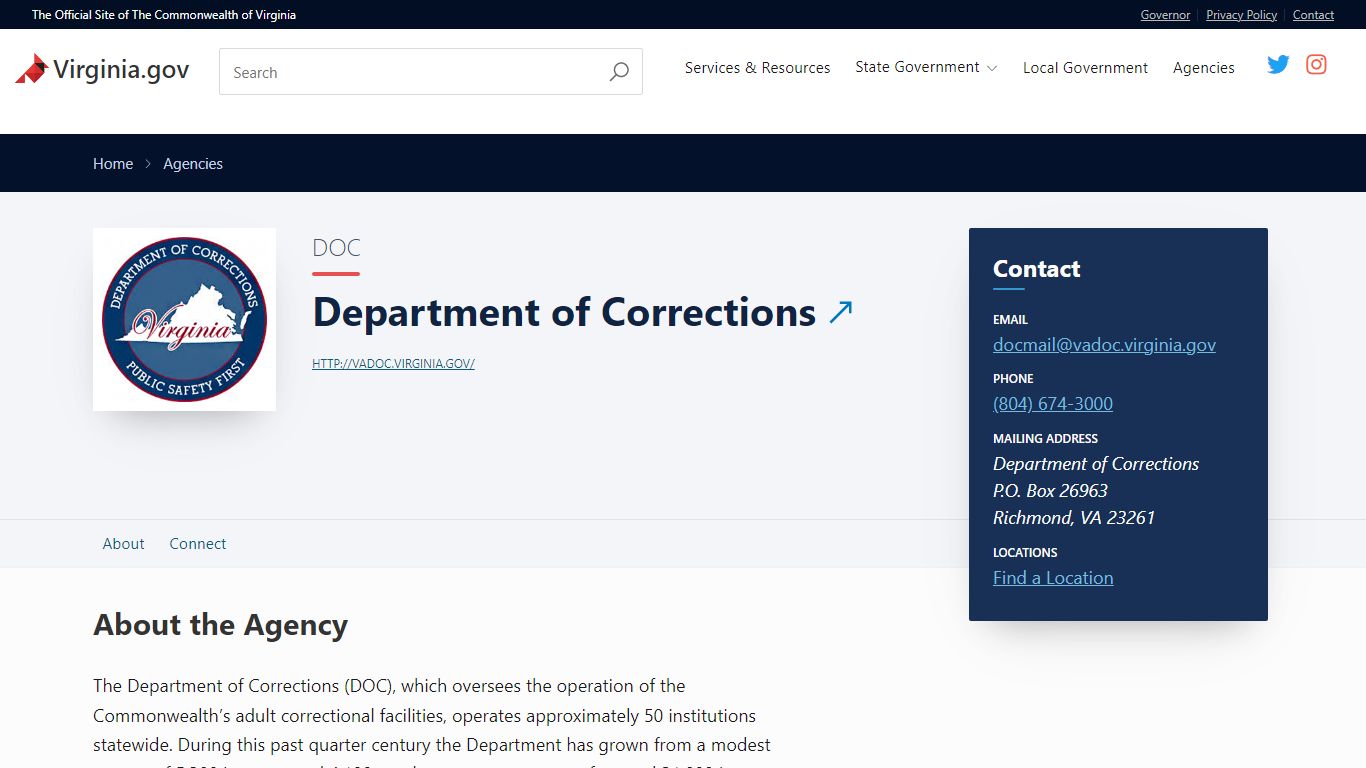
VADOC Offender Visitor Application Process
Applicants submitting a visitation request through the VADOC online portal receive automated email updates at the address provided during registration. Users are advised to add the protected domain to their contacts to prevent messages from being marked as spam. Once approved—typically within three business days—applicants must log in to the scheduling system, choose a 30-minute or 60-minute time slot, and confirm the visit using the on-screen receipt. The system records the visitor’s identification number, relationship to the inmate, and purpose of the visit for compliance and security tracking. All visits are subject to facility-specific rules, including dress code and prohibited items.
https://visitationform.vadoc.virginia.gov/ApplicationSubmitted.aspx
ViaPath Visitor Web 8.0 Scheduling Changes
Effective June 22, 2022, the ViaPath Visitor Web 8.0 system extended standard visitation periods from one hour to two hours to improve family engagement and reduce wait times. The updated schedule allows weekend visits on July 2, 3, and 4, 2022, with three daily blocks: 8:00 a.m.–10:00 a.m., 10:15 a.m.–12:15 p.m., and 12:30 p.m.–2:30 p.m. Each block includes a 15-minute transition interval for staff to conduct entry checks and maintain facility security. The system logs check-in times, generates QR codes for access control, and automatically updates inmate case files to reflect visitor activity.
https://vadoc.gtlvisitme.com/app
Virginia DHRM Alternative Hiring Process Overview
The Commonwealth’s Department of Human Resource Management (DHRM) runs an Alternative Hiring Process to increase state employment of qualified individuals with disabilities. Launched in 2021, this program bypasses traditional competitive exams and focuses on targeted recruitment for roles in administration, information technology, and facility management. As of December 2024, 112 candidates have been placed across agencies, including the Department of Corrections, Transportation, and Education. Applications are accepted year-round via the DHRM online portal, and a public calendar lists upcoming informational webinars and job fairs.
https://www.dhrm.virginia.gov/
Virginia State Employee Directory Search Features
The State Employee Directory, hosted on Virginia.gov, lets users find contact information for over 30,000 state workers. Required search fields include Last Name; optional fields are First Name, Agency, Agency Abbreviation, and Agency Number. Results come from the Department of Human Resource Management’s Personnel Management Information System (PMIS), ensuring phone numbers, emails, and office locations are current. Authorized agency staff can use a bulk export feature to integrate employee data into internal directories for HR and communication purposes.
https://www.employeedirectory.virginia.gov/
NAAVI Portal for Victims and Survivors
NAAVI (National Victim Assistance and Information) is the secure web platform VADOC uses to deliver post-sentencing services to victims and survivors. Launched in 2020, it processes over 9,000 case files annually. Funding includes Grant 21-B4115VP19 from the Virginia Department of Criminal Justice Services and allocations from the U.S. Department of Justice Office for Victims of Crime. Users can submit restitution requests, view upcoming court dates, access counseling resources, and receive case status alerts through a verified login. The portal ensures privacy and compliance with federal victim rights laws.
TMS Online Access Portal
The TMS (Transportation Management System) Online portal gives VADOC staff secure, browser-based access to inmate transport schedules, vehicle maintenance logs, and driver compliance records. Built on 256-bit SSL encryption, it syncs with the central database to update trip details in real time. As of November 2024, over 150 authorized users across three regional offices submit mileage reports and generate audit trails for Federal Motor Carrier Safety Administration (FMCSA) compliance. The system supports GPS tracking, route optimization, and emergency alert functions.
https://vadocpro.tmsonline.com/tms/
Virginia.gov Main Portal Overview
Virginia.gov is the primary gateway for residents accessing state services. The homepage features a searchable interface for topics like government jobs, business registration, and public health updates. During the COVID-19 pandemic, it hosted a live dashboard showing daily case counts, vaccination rates, and testing locations. Quick links connect users to the Department of Social Services, DMV, and Virginia Employment Commission. The site is optimized for mobile use and supports multiple languages to serve diverse communities.
Virginia IT Agency VITA Service Portal and Security Conference
The Virginia Information Technologies Agency (VITA) manages the state’s shared IT infrastructure, including the VCCC help desk. Users can email a protected address or call (866) 637-8482 for support with network issues, application access, or cybersecurity alerts. VITA hosted its annual Information Security Conference virtually in July 2022, focusing on “Securing the Hybrid Work Environment.” The event drew 350 participants and covered multi-factor authentication, cloud security, and incident response planning. Recordings and materials remain available to state employees through the VITA portal.
https://www.vita.virginia.gov/
Inmate Search and Facility Locator Tools
VADOC provides a public inmate search tool that allows users to locate individuals in state custody by name or inmate ID. Results include current facility, projected release date, and offense classification. The “Find a Location” feature maps all 31 facilities with addresses, phone numbers, and visiting guidelines. Each facility page lists approved visitor lists, mail policies, and commissary options. Families can use these tools to plan visits, send letters, or track case progress without calling the facility directly.
Probation and Parole Supervision Programs
VADOC oversees one of the largest probation and parole systems in the Southeast, with officers managing over 18,000 active cases. Supervision includes regular check-ins, drug testing, employment verification, and participation in treatment programs. Officers use risk assessment tools to tailor support plans and reduce reoffending. In 2025, the department introduced new training on mental health first aid and conflict resolution to improve officer safety and client outcomes.
Victim Notification and Rights Services
Victims of crimes committed by VADOC offenders can register for free notification services through NAAVI. Alerts include changes in custody status, parole hearings, and release dates. The system complies with the federal Crime Victims’ Rights Act and Virginia’s Victim Bill of Rights. Counselors are available to explain legal processes and connect survivors with local support groups. All services are confidential and require identity verification.
Employment and Career Development in VADOC
VADOC hires correctional officers, counselors, medical staff, and administrative personnel through the state’s official job portal. Benefits include health insurance, retirement plans, and tuition reimbursement. The Alternative Hiring Process supports applicants with disabilities, offering direct placement in eligible roles. New hires undergo background checks, physical fitness tests, and academy training. Promotions are based on performance reviews and continuing education.
Public Records and Transparency Initiatives
VADOC publishes annual reports on population statistics, use-of-force incidents, and program effectiveness. Data is available through the Virginia.gov public records portal. Requests under FOIA are processed within five business days. The department also shares budget documents, audit findings, and policy updates to promote accountability. All materials are posted in accessible formats for people with disabilities.
Community Reintegration and Reentry Support
VADOC partners with nonprofits and local governments to help formerly incarcerated individuals find housing, jobs, and healthcare. Programs include vocational training, GED classes, and cognitive behavioral therapy. Since 2022, these efforts contributed to a 7% decline in recidivism. The department hosts job fairs inside facilities and connects inmates with employers before release. Family reunification workshops are offered monthly.
Technology and Cybersecurity in Corrections
VADOC uses secure digital systems to manage inmate records, visitation, and transportation. All platforms comply with state and federal cybersecurity standards. Staff receive annual training on data protection and phishing prevention. The VITA-managed infrastructure includes firewalls, intrusion detection, and encrypted communications. Regular audits ensure systems remain resilient against threats.
Emergency Preparedness and Facility Safety
Each VADOC facility has an emergency operations plan for fires, medical crises, and natural disasters. Drills are conducted quarterly with local law enforcement and fire departments. Inmates are trained in evacuation procedures. Medical staff are on-site 24/7, and telehealth services connect patients with specialists. The department maintains backup power and communication systems for continuity of operations.
Volunteer and Religious Services
Faith-based organizations and community volunteers provide spiritual support, mentoring, and educational programs in VADOC facilities. All volunteers undergo background checks and orientation. Services include worship sessions, Bible studies, and life skills workshops. Requests to volunteer are submitted through the VADOC website and reviewed by facility chaplains.
Legal Access and Attorney Visitation
Attorneys can schedule confidential visits with clients using the online portal. Legal mail is processed separately and delivered unopened. Court orders and subpoenas are handled by the records department. VADOC complies with all judicial mandates and provides access to law libraries within facilities. Paralegals and investigators may also request appointments.
Youth and Juvenile Offender Programs
While VADOC primarily manages adult offenders, it collaborates with the Department of Juvenile Justice on transitional cases. Young adults aged 18–21 may be housed in specialized units with age-appropriate programming. Educational services, mental health counseling, and family therapy are prioritized. The goal is to reduce recidivism and support successful community reintegration.
Mental Health and Substance Abuse Treatment
VADOC offers comprehensive mental health services, including screening, therapy, and medication management. Substance abuse programs use evidence-based approaches like cognitive behavioral therapy and medication-assisted treatment. Certified counselors work with inmates to develop recovery plans. Peer support groups meet weekly. Services continue post-release through community partnerships.
Medical Care and Health Services
All VADOC facilities provide on-site medical care, including routine check-ups, chronic disease management, and emergency response. Dental and vision services are available. Inmates can request appointments through their housing unit. Medical records are confidential and comply with HIPAA. Telehealth expands access to specialists for complex conditions.
Commissary and Inmate Banking
Inmates can purchase food, hygiene items, and clothing through the commissary using funds from their trust accounts. Money can be added by family via online portals, money orders, or kiosks. Spending limits apply. Earnings from prison jobs are deposited into these accounts. Statements are available upon request.
Mail and Correspondence Policies
Inmates may send and receive letters, photos, and approved publications. All mail is inspected for contraband. Legal and medical correspondence is handled confidentially. Packages must be sent through approved vendors. Prohibited items include cash, stamps, and certain printed materials. Guidelines are posted on the VADOC website.
Grievance and Complaint Procedures
Inmates can file formal grievances about living conditions, staff behavior, or policy violations. Forms are available in housing units. Complaints are investigated by internal affairs. Appeals go to the regional director. Retaliation is prohibited. Outcomes are documented and reviewed annually for systemic issues.
Parole and Release Planning
The parole board reviews eligible cases every two years. Inmates submit release plans including housing, employment, and treatment. VADOC provides reentry kits with IDs, bus tickets, and resource lists. Supervised release includes check-ins and drug testing. Early release is possible for good behavior and program completion.
Training and Professional Development
VADOC officers receive initial training at the Central Training Academy, covering use of force, ethics, and crisis intervention. Ongoing education includes de-escalation techniques and cultural competency. Supervisors attend leadership courses. The department partners with colleges for degree programs in criminal justice.
Diversity, Equity, and Inclusion Efforts
VADOC promotes a respectful workplace through anti-bias training and inclusive hiring. Employee resource groups support women, veterans, and minorities. Policies prohibit discrimination based on race, gender, or religion. Community outreach includes town halls and advisory councils.
Environmental and Sustainability Practices
Facilities use energy-efficient lighting, water conservation systems, and recycling programs. Some sites have solar panels and composting. VADOC tracks carbon emissions and waste reduction. Inmates participate in green jobs like landscaping and maintenance.
Research and Data Analytics
VADOC collaborates with universities on recidivism studies and program evaluations. Data is anonymized and shared with policymakers. Dashboards track key metrics like population trends and staff retention. Findings inform policy changes and budget requests.
Public Education and Awareness Campaigns
The department hosts tours, publishes newsletters, and speaks at schools to educate the public about corrections. Topics include crime prevention, victim support, and career opportunities. Social media shares success stories and safety tips. Annual events honor officers and community partners.
Partnerships with Law Enforcement
VADOC works closely with local police, sheriffs, and federal agencies on fugitive apprehension, intelligence sharing, and joint operations. Memorandums of understanding define roles and responsibilities. Training exercises improve coordination during emergencies.
Disability Accommodations and Accessibility
All VADOC websites and facilities meet ADA standards. Screen readers, captioning, and sign language interpreters are available. Inmates with disabilities receive individualized care plans. Staff are trained in disability awareness and communication techniques.
Budget and Financial Accountability
VADOC’s annual budget is approved by the General Assembly and published online. Funds support operations, staff salaries, and rehabilitation programs. Independent audits ensure proper use of taxpayer money. Reports detail spending by category and facility.
Historical Overview of VADOC
Established in 1975, VADOC evolved from county jails into a unified state system. Early reforms focused on humane treatment and professional standards. Over decades, it adopted evidence-based practices and technology. Today, it balances public safety with rehabilitation, serving as a model for other states.
Future Initiatives and Strategic Goals
VADOC aims to expand reentry programs, reduce overcrowding, and improve mental health services. Plans include new facilities with modern design and increased use of telehealth. The department will continue investing in staff training and community partnerships to lower recidivism and enhance safety.
Frequently Asked Questions
How do I visit an inmate in a Virginia state prison? To visit an inmate, submit an application through the VADOC online portal. Add the protected email domain to your contacts to receive updates. Once approved, log in to schedule a 30- or 60-minute visit. Bring valid ID and follow facility rules. Visits are subject to cancellation for security reasons.
Can I send money to an inmate? Yes, money can be sent via JPay, money order, or cashier’s check. Online deposits are processed through the VADOC website or kiosks in lobbies. Funds appear in the inmate’s trust account within 24 hours. Spending limits apply to commissary purchases.
How do I find out if someone is in custody? Use the public inmate search tool on the VADOC website. Enter the person’s name or inmate ID. Results show current facility, location, and basic status. For legal matters, contact the records department with proper documentation.
What services are available for victims of crime? Victims can register with NAAVI for free notifications about offender status. The portal provides case updates, restitution requests, and counseling resources. All services are confidential and comply with state and federal victim rights laws.
How can I apply for a job with VADOC? Visit the Virginia state jobs portal and search for “Department of Corrections.” Positions include correctional officers, counselors, and medical staff. The Alternative Hiring Process supports applicants with disabilities. All hires undergo background checks and training.
Where is the Virginia Department of Corrections headquarters? The main office is at P.O. Box 26963, Richmond, VA 23261. The physical address is 6900 Courthouse Road, Richmond, VA 23236. Phone: (804) 674-3000. Hours: Monday–Friday, 8 a.m.–5 p.m. ET.
Are VADOC facilities open to the public for tours? Yes, limited tours are available by appointment. Contact the public information office to schedule. Tours cover security procedures, rehabilitation programs, and daily operations. Groups must provide identification and pass background checks.
Official Website: https://vadoc.virginia.gov/
Main Phone: (804) 674-3000
Visiting Hours: Vary by facility; check online locator
Mailing Address: P.O. Box 26963, Richmond, VA 23261
Email: Protected address (see website source)